

The Art of Commercial Vehicle Graphics

Every day, thousands of delivery vans, service trucks, and corporate fleets navigate city traffic. To the average commuter, they are simply part of the morning commute. To a savvy business owner every blank panel on a commercial vehicle is prime real estate, a moving billboard capable of generating tens of thousands of daily impressions.
Transforming a working van into a high-impact branding machine is far more than slapping stickers onto steel. Commercial vehicle wrapping is a precise craft where graphic design, material science, and expert installation intersect.
Designing for Motion and Scale
Unlike static print media or digital ads, a commercial wrap must communicate instantly while moving at 55 mph. A stunning design means nothing if a prospect can’t read the business name or phone number as the van drives past.
Effective commercial wraps prioritize visual hierarchy: 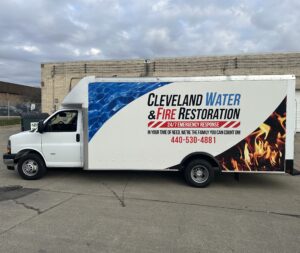
- The 3-Second Rule: Primary messaging (company name and core service) must be instantly recognizable from 50 feet away.
- Architectural Awareness: Designers must account for door handles, fuel doors, sliding hinges, and window contours. Crucial contact information or logos placed over deep body creases or door seams will distort or get cut in half during installation.
- Contrast and Brand Consistency: High-contrast colors ensure legibility regardless of weather, while strict brand adherence keeps fleet messaging unified across dozens of vehicles.
Prep Work and Engineering
Before a single inch of cast vinyl touches the vehicle, rigorous preparation is required. Commercial vehicles often log heavy miles, accumulating road tar, grease, and industrial fallout.
Installers spend hours running clay bars, applying solvents, and stripping door handles or badging. Any residual dirt left under the wrap will compromise the pressure-activated adhesive, causing premature lifting or bubbling.
Installation
During installation, mechanics use squeegees to work out air through micro-grooved air- release channels in the adhesive. Complex areas, such as deep corrugated van panels or curved bumpers, require precise heating with hot-air guns to relax the film into place without overstretching the printed graphics. Once applied, installers post-heat the edges to around 180°F–200°F to reset the vinyl’s “memory,” ensuring it permanently holds its new shape.
The Ultimate ROI Drive
Investing in a commercial vehicle wrap offers unmatched return on investment compared to traditional media channels.
- Commercial Vinyl Wrap: One-time production and install cost, 5-7 years lifespan, reaches localized area and routes, and helps preserve OEM paint
- Static Billboards: Ongoing monthly cost, 1-3 months lifespan, and fixed location
Conclusion
When executed properly, a commercial wrap elevates a business from a minor local trade into an established, authoritative brand every time the key turns in the ignition. Contact our office to see how we can assist in your branding efforts with custom vehicle wraps and graphics.
Click Here for More Information
Back